➡️ INTRODUCTION
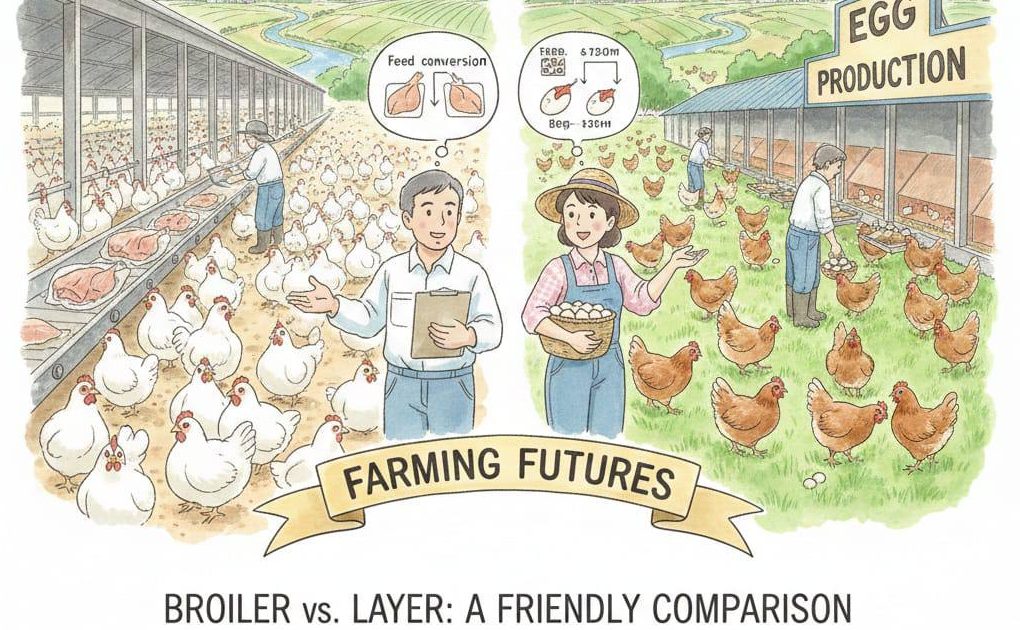
➡️ Poultry farming offers two main paths for farmers: broiler farming for meat production and layer farming for egg production. Both types have their advantages and challenges, and the choice depends on available resources, market demand, and management skills. Broilers grow quickly and provide faster returns, while layers require longer care but generate continuous income through eggs. Beginners often face confusion about which option is more profitable and suitable for their farm size. Profitability depends on factors like feed cost, space, infrastructure, labor, and market price. This article explains the differences between broiler and layer farming in a simple and practical way. By understanding key aspects such as growth cycle, investment, and income potential, farmers can make informed decisions to maximize profit and ensure long-term sustainability.
➡️ Broiler farming delivers quick returns due to faster growth.
➡️ Layer farming provides continuous income through egg production.
➡️ Proper investment planning affects farm profitability.
➡️ Market demand and pricing determine income potential.
➡️ Management practices influence bird health and production efficiency.
➡️ Below are the main factors farmers should consider when choosing between broiler and layer farming.
🔵 1️⃣ ➡️ Growth Cycle and Production Duration
➡️ Broilers have a short growth cycle of 5 to 8 weeks before they reach market weight, providing fast returns on investment. Layer birds take longer to mature, usually 18 to 20 weeks before they start laying eggs, and continue producing for about 72 weeks. The short cycle of broilers allows farmers to sell multiple batches annually, generating rapid cash flow. Layers provide steady income but require continuous care and maintenance. Farmers must decide if they prefer quick profits from broilers or long-term, continuous earnings from layers. Understanding growth cycles helps in planning farm operations, managing feed, and predicting income accurately.
🔵 2️⃣ ➡️ Investment and Setup Costs
➡️ Broiler farming generally requires lower initial investment compared to layer farming, as broilers need less infrastructure and simpler housing. Layers require larger space, nesting boxes, perches, and proper lighting systems for egg production. Feed costs are also higher in layer farms since hens require specific nutrients for consistent egg laying. Equipment like egg trays, collection tools, and storage adds to the investment. Farmers should prepare a detailed cost analysis, including chicks, feed, housing, labor, and health care. Proper budgeting ensures profitability and helps avoid financial losses. Investment planning is crucial for choosing the farm type that aligns with available resources and expected returns.
🔵 3️⃣ ➡️ Income Potential and Profitability
➡️ Broilers offer quick returns because the market demand for chicken meat is consistent, and farmers can sell multiple cycles per year. Layer farming generates continuous income through daily egg production, which can be more stable but slower to accumulate. Profitability depends on feed conversion ratio, bird health, and market prices. Broilers may face higher price fluctuations during festivals or seasonal demand changes. Layers offer long-term income but require careful feed and management to maintain egg quality. Comparing expected income and expenses helps farmers decide which farm type suits their financial goals and risk tolerance.
🔵 4️⃣ ➡️ Management Practices and Labor Requirements
➡️ Broiler farms demand intensive care during the short growth period, including frequent feeding, temperature control, and disease monitoring. Layer farms require daily maintenance for longer periods, including egg collection, nesting management, vaccination, and proper lighting schedules. Labor cost is higher in layer farms due to continuous monitoring and management. Both farm types benefit from biosecurity measures, clean housing, and timely health care. Efficient management reduces mortality, improves productivity, and enhances profit margins. Farmers should assess their ability to maintain the farm over the required duration before choosing between broilers and layers.
🔵 5️⃣ ➡️ Market Demand and Risk Factors
➡️ Market trends greatly influence profitability. Broiler meat often has high demand, especially during festivals and holidays, providing opportunities for quick profits. Layer eggs are a staple product, offering steady but slower revenue. Price fluctuations, disease outbreaks, and feed cost increases can affect both farm types. Broiler farms face higher risk if disease spreads quickly due to dense populations, while layer farms risk income reduction if egg production drops. Farmers must research local demand, competition, and market stability to choose the farm type with acceptable risk and maximum profit potential.
➡️ CONCLUSION
➡️ Choosing between broiler and layer farming depends on investment capacity, management skills, and income goals. Broilers provide faster returns with shorter cycles, while layers offer continuous, long-term income through egg production. Proper space allocation, infrastructure, equipment, feed management, and biosecurity practices are essential for both types. Understanding growth cycles, costs, market demand, and risks helps farmers make informed decisions. By applying efficient management practices, farmers can maximize profitability and sustainability. Ultimately, the best choice is the one that matches the farmer’s resources, expertise, and market conditions, ensuring a successful and rewarding poultry business.