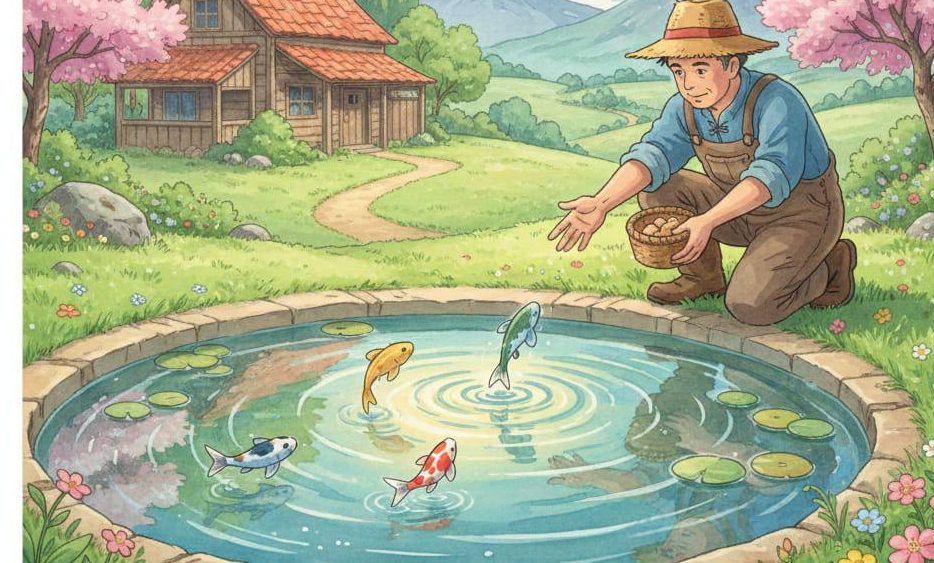
🐟 INTRODUCTION
🐟 Fish feeding plays a key role in achieving fast growth and higher yield in commercial fish farming. Even if farmers select good fish species and maintain proper water quality, poor feeding practices can reduce growth rate and overall profit. Feed is the largest cost in fish farming, so using it wisely is very important. Correct feeding techniques help fish convert feed into body weight efficiently, reduce waste, and keep pond water clean. Many farmers face problems like slow growth, uneven fish size, and high feed loss due to lack of proper feeding knowledge. This article explains simple, practical, and natural fish feeding techniques that can be followed by beginners as well as experienced farmers. By understanding the right feed type, feeding quantity, timing, and method, farmers can improve fish health, achieve faster growth, and increase total production in a sustainable way.
🐟 Feed quality directly affects fish growth rate and feed conversion efficiency.
🐟 Feeding frequency and timing help fish digest feed properly and grow evenly.
🐟 Overfeeding can pollute water and increase disease risk in fish ponds.
🐟 Underfeeding leads to slow growth and weak fish health.
🐟 Proper feeding techniques balance cost, growth, and pond management.
🐟 Below are the most important fish feeding techniques that help achieve fast growth and higher yield. These methods are practical, easy to follow, and suitable for small and large-scale fish farming systems.
🔵 1️⃣ 🐟 Choosing the Right Feed Type for Fish Growth
🐟 Selecting the correct feed type is the foundation of successful fish feeding. Fish require a balanced diet that includes protein, carbohydrates, fats, vitamins, and minerals. Protein is especially important for fast growth, as it helps in muscle development and body weight gain. Different fish species have different protein needs, so farmers should select feed according to the species being cultured. Floating feed is commonly used because it allows farmers to observe feeding behavior and reduce waste. Sinking feed may be suitable for bottom-feeding species. Natural feed such as plankton also supports growth but is not enough for commercial production. Using good-quality commercial feed with proper nutrient balance ensures uniform growth, better health, and higher survival rates, which directly improves yield.
🔵 2️⃣ 🐟 Maintaining Proper Feeding Quantity and Portion Size
🐟 Feeding the correct quantity is essential to avoid both overfeeding and underfeeding. Overfeeding increases feed cost, causes water pollution, and reduces oxygen levels in the pond. Underfeeding results in slow growth and poor fish condition. Farmers should calculate feed quantity based on fish size, total biomass, and growth stage. Young fish require more feed relative to their body weight, while adult fish need less. Regular sampling of fish helps adjust feeding rates accurately. Feeding small portions multiple times a day improves feed utilization and reduces waste. Observing fish behavior during feeding is also important. If feed remains uneaten, the quantity should be reduced. Proper portion control improves feed efficiency and supports steady growth.
🔵 3️⃣ 🐟 Correct Feeding Time and Frequency
🐟 Feeding time and frequency have a strong impact on fish growth and digestion. Fish are more active during certain times of the day, usually in the morning and evening when water temperature and oxygen levels are suitable. Feeding during these times improves appetite and feed intake. Feeding frequency depends on fish size and species. Small fish require frequent feeding, while larger fish can be fed fewer times. Regular feeding schedules help fish adapt and reduce stress. Irregular feeding can disturb growth patterns and increase competition among fish. Farmers should avoid feeding during extreme weather conditions, such as very hot afternoons or heavy rain. Proper timing and frequency improve growth rate and maintain stable pond conditions.
🔵 4️⃣ 🐟 Improving Feeding Methods to Reduce Waste
🐟 Feeding methods play an important role in minimizing feed loss and improving growth. Broadcasting feed evenly across the pond ensures all fish get access to feed and reduces competition. Using feeding trays or feeding rings helps monitor feed consumption and prevents feed from spreading into unwanted areas. These methods are especially useful in intensive fish farming systems. Feeding at the same location daily trains fish to gather, improving feeding efficiency. Poor feeding methods result in feed sinking into mud, where it decomposes and pollutes water. Clean feeding practices also reduce the risk of disease outbreaks. By improving feeding methods, farmers can save feed cost, maintain water quality, and achieve better growth performance.
🔵 5️⃣ 🐟 Monitoring Fish Health and Adjusting Feeding Practices
🐟 Regular monitoring of fish health is necessary to ensure feeding practices are effective. Healthy fish show active feeding behavior and uniform growth. Any sudden change in appetite may indicate stress, poor water quality, or disease. During such times, feeding should be reduced or stopped temporarily. Seasonal changes also affect feeding requirements, as fish eat less in colder temperatures. Farmers should adjust feeding rates according to water temperature and fish activity. Keeping simple records of feed usage and growth helps evaluate performance and make improvements. Healthy feeding practices not only increase growth but also improve fish immunity. Continuous observation and adjustment lead to higher survival rates and better overall yield.
🐟 CONCLUSION
🐟 Effective fish feeding techniques are essential for achieving fast growth and higher yield in commercial fish farming. Choosing the right feed, providing correct quantity, maintaining proper feeding time, and using efficient feeding methods all work together to improve production. Careful observation of fish behavior and regular adjustment of feeding practices help reduce feed waste and maintain good water quality. Balanced feeding not only increases growth rate but also supports fish health and survival. Farmers who follow these practical and natural feeding techniques can reduce costs and increase profitability in a sustainable way. Smart feeding management ensures long-term success and makes fish farming more efficient, environmentally friendly, and rewarding for farmers at all levels.