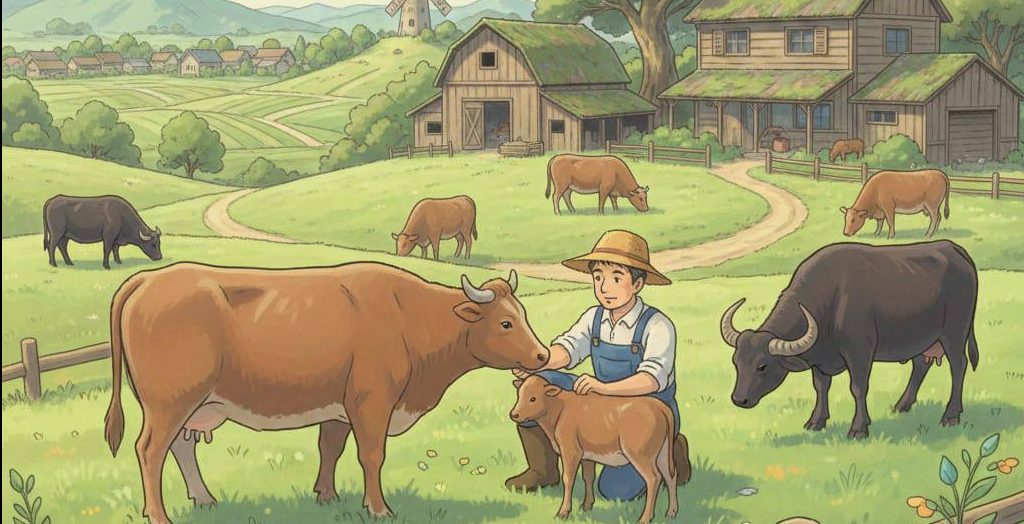
🐄 INTRODUCTION
Dairy farming is one of the most dependable agricultural businesses when managed with the right knowledge and planning. The foundation of a profitable dairy farm starts with selecting suitable cows or buffaloes that match the farmer’s environment, budget, and long-term goals. Many farmers face losses not because of poor effort, but due to wrong animal selection at the beginning. Factors such as milk yield, health status, adaptability, and feeding needs play a major role in determining success. Proper selection helps reduce veterinary costs, improves milk quality, and ensures steady income over the years. This guide is designed to help farmers, especially beginners, understand how to choose the right dairy animals wisely. With correct selection and care, dairy farming can become a sustainable and rewarding agricultural practice worldwide.
🐄 Healthy animals form the backbone of a successful dairy farm. Selecting strong and disease-free cows or buffaloes reduces risk and improves productivity.
🐄 Milk production should always be balanced with feeding and maintenance costs. High yield is useful only when expenses remain under control.
🐄 Climate compatibility is very important in dairy farming. Animals that adapt well to local weather perform better and stay healthier.
🐄 The age and physical structure of dairy animals effect their productive lifespan. Young, well-built animals give better long-term returns.
🐄 Local market demand for milk quantity and fat content decides whether cows or buffaloes are more profitable for farmers.
🐄 Below are the key points that farmers must understand before selecting cows or buffaloes for profitable dairy farming. These practical guidelines help avoid common mistakes and ensure long-term success.
🔵 1️⃣ Selecting the Right Breed According to Region and Climate
🐄 Breed selection is the most critical decision in dairy farming. Indigenous breeds are usually well adapted to local climates and can tolerate heat, humidity, and local diseases better. They require less intensive management and are suitable for farmers with limited resources. On the other hand, crossbred or exotic breeds can produce more milk but need quality feed, clean housing, and regular health monitoring. Farmers should never select a breed only based on milk yield; regional adaptability is equally important. Choosing a breed that suits local weather conditions helps maintain animal health, reduces stress, and ensures consistent milk production throughout the year. Proper breed selection also lowers mortality rates and long-term maintenance costs, making dairy farming more stable and profitable.
🔵 2️⃣ Evaluating Milk Yield Along with Feed Efficiency
🐄 While high milk yield is attractive, it should not be the only selection factor. Farmers must consider how much feed is required to produce that milk. Some animals give moderate milk but consume less feed, making them more economical. Buffaloes usually produce milk with higher fat content, which is often sold at a better price. Cows may produce larger quantities of milk but with lower fat. Farmers should calculate expected feed cost versus milk income before buying animals. Selecting animals with good feed conversion efficiency helps maintain profitability even when feed prices rise. Balanced decision-making ensures steady income without excessive expenses.
🔵 3️⃣ Checking Age, Body Condition, and Physical Appearance
🐄 The age of a cow or buffalo directly affects its productive life. Animals between two to five years of age are usually ideal for dairy farming, as they have many productive years ahead. The body condition should be strong, neither too thin nor too fat. A healthy animal has bright eyes, smooth skin, strong legs, and a well-developed udder. Avoid animals with visible injuries, deformities, or poor posture. Proper physical inspection helps farmers avoid weak animals that may suffer from frequent health issues. Good body structure ensures better milk production, easy movement, and long-term performance.
🔵 4️⃣ Health History and Disease Resistance
🐄 Selecting animals with a clean health history is essential for profitable dairy farming. Farmers should always ask for vaccination records and previous illness details. Animals that frequently fall sick increase veterinary costs and reduce milk yield. Indigenous and locally adapted breeds usually have better disease resistance compared to exotic breeds. Observing the animal’s behavior, appetite, and movement can give clues about its health condition. Quarantining new animals before mixing them with existing stock is also a good practice. Healthy animals not only produce more milk but also ensure farm biosecurity and long-term sustainability.
🔵 5️⃣ Understanding Market Demand and Long-Term Profitability
🐄 Market demand plays a major role in deciding whether cows or buffaloes are more suitable for a farm. In some regions, buffalo milk is preferred due to its high fat content, while in others, cow milk has higher demand due to processing industries. Farmers should study local milk prices, buyer preferences, and transport facilities before selection. Long-term profitability depends on consistent demand, not short-term trends. Selecting animals based on market needs helps ensure stable income and easier milk sales. Smart market-oriented selection supports sustainable dairy farming growth.
🐄 CONCLUSION
Selecting the right cows or buffaloes is the cornerstone of profitable and sustainable dairy farming. Proper attention to breed, milk yield, health condition, age, and market demand helps farmers reduce risks and improve long-term returns. Dairy farming is not just about owning animals but about managing them wisely with informed decisions. Farmers who invest time in careful selection benefit from healthier animals, steady milk production, and lower maintenance costs. By following practical selection practices and understanding local conditions, dairy farming can become a reliable source of income. Smart, responsible, and sustainable animal selection ensures long-term success and strengthens the future of dairy agriculture.