🐄 INTRODUCTION
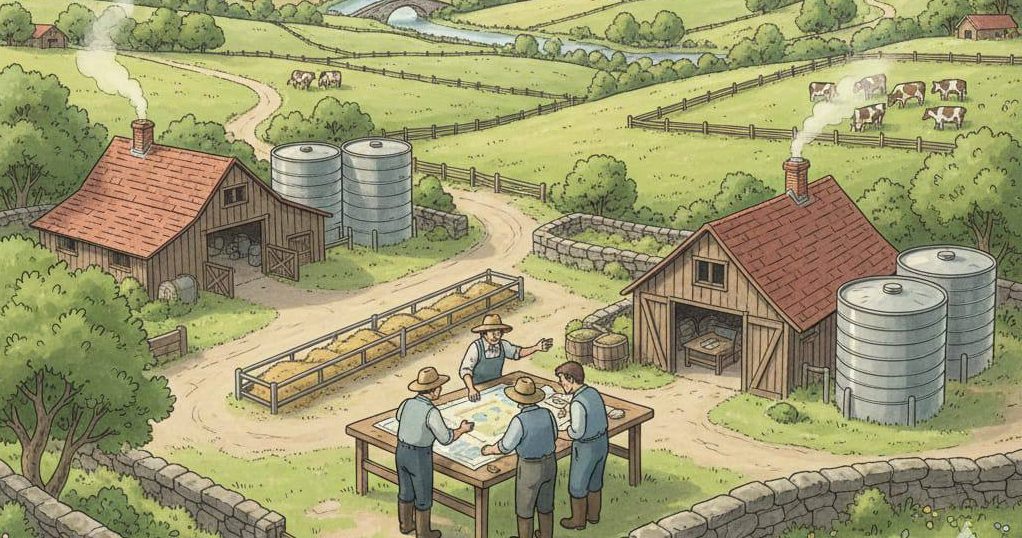
Starting a dairy farm is a long-term agricultural investment that can provide steady income when planned correctly. Many farmers are interested in dairy farming but feel confused about the actual setup cost and required infrastructure. The total investment depends on farm size, number of animals, location, and level of management. Expenses include land preparation, animal purchase, housing, feeding systems, equipment, and daily operational needs. Without proper budgeting, farmers may face financial pressure and management problems later. This guide explains dairy farm setup cost in a simple and practical way, making it easy for beginners and small farmers to understand. By knowing where money is spent and how to plan infrastructure smartly, farmers can reduce risk and build a sustainable dairy business that grows steadily over time.
🐄 Land availability is the first factor that affects dairy farm setup cost. Own land reduces investment, while rented land increases monthly expenses.
🐄 The number and type of animals decide a major part of the total cost. High-yield animals require higher initial investment and better care.
🐄 Proper housing infrastructure protects animals from weather stress and diseases, improving milk production and animal comfort.
🐄 Feeding and fodder arrangements create recurring expenses that must be planned carefully from the beginning.
🐄 Equipment, labor, and utilities like water and electricity also add to the overall dairy farm investment.
🐄 Below are the key cost and infrastructure areas that every farmer should understand before starting a dairy farm. These points explain where money is spent and how to plan wisely.
🔵 1️⃣ Land and Location Investment
🐄 Land is the foundation of a dairy farm and directly impacts setup cost. If a farmer already owns land, the investment becomes much lower. For new farmers, buying land increases capital requirements significantly, while leasing land involves regular rent payments. The location should have good road access, water availability, and proximity to milk collection centers. Land is needed not only for animal sheds but also for fodder storage, manure pits, and open movement space. Poor location choices can increase transport costs and limit farm expansion. Planning land use efficiently helps reduce unnecessary construction expenses and improves daily farm operations. Selecting the right location at the beginning saves money and ensures smooth dairy farming activities in the long run.
🔵 2️⃣ Cost of Purchasing Dairy Animals
🐄 Animal purchase is one of the biggest expenses in dairy farm setup. The cost varies depending on breed, age, milk yield, and health condition. High-yield cows or buffaloes cost more but can generate better income if managed properly. Farmers should avoid buying animals only based on low price, as unhealthy animals lead to high veterinary costs and low productivity. It is wise to start with a small number of good-quality animals and expand gradually. Proper health checks, vaccination records, and physical inspection are essential before purchase. Smart animal selection balances investment with expected returns and reduces long-term risks.
🔵 3️⃣ Housing and Infrastructure Development
🐄 Proper housing is essential for animal health, comfort, and productivity. Shed construction cost depends on materials used, shed design, and number of animals. A good dairy shed provides proper ventilation, drainage, and protection from heat, rain, and cold. Poor housing leads to stress, diseases, and reduced milk yield. Infrastructure also includes calf pens, milking areas, feed storage rooms, and manure management systems. Simple but well-planned sheds reduce construction costs while maintaining functionality. Investing in durable and hygienic housing saves maintenance costs and improves animal welfare over time.
🔵 4️⃣ Feeding, Fodder, and Water Arrangements
🐄 Feeding cost is a major recurring expense in dairy farming. Initial setup includes fodder storage structures, feeding troughs, and water supply systems. Farmers should plan a mix of green fodder, dry fodder, and concentrate feed to control costs. Growing fodder on available land significantly reduces daily expenses. Clean and continuous water supply is critical, as dairy animals consume large amounts of water daily. Poor feeding and water management reduce milk production and animal health. Efficient feeding infrastructure helps maintain consistent productivity and improves overall farm profitability.
🔵 5️⃣ Equipment, Labor, and Operating Costs
🐄 Dairy farming requires basic equipment such as milking machines or buckets, milk cans, weighing scales, and cleaning tools. These one-time investments improve work efficiency and hygiene. Labor cost depends on farm size and management system. Small farms may rely on family labor, while larger farms need hired workers. Electricity, water bills, veterinary care, and routine maintenance add to operating costs. Proper planning of these expenses helps avoid cash flow problems. Investing in essential equipment and skilled labor ensures smooth daily operations and long-term sustainability of the dairy farm.
🐄 CONCLUSION
Setting up a dairy farm requires careful planning, realistic budgeting, and smart infrastructure decisions. Understanding the full setup cost helps farmers avoid unexpected expenses and manage resources efficiently. Investment in quality animals, proper housing, feeding systems, and basic equipment builds a strong foundation for success. Dairy farming is not a quick-profit business but a steady income source when managed sustainably. Farmers who start small, control costs, and expand gradually are more likely to succeed. With practical planning and responsible investment, dairy farming can become a profitable and reliable agricultural enterprise that supports rural livelihoods and long-term growth.